Classic
LLM vs LLM Chess: Two LLM agents playing PettingZoo Chess (chess_v6) through MOSAIC's Operator system.
Turn-based board games using PettingZoo’s AEC (Alternating Environment Cycle) API.
In MOSAIC, these run with SEQUENTIAL stepping — each agent observes, decides,
and acts before the turn passes to the next player.
- Install:
pip install -e ".[pettingzoo]"- Paradigm:
Multi-agent (turn-based)
- Stepping:
SEQUENTIAL- Docs:
Chess
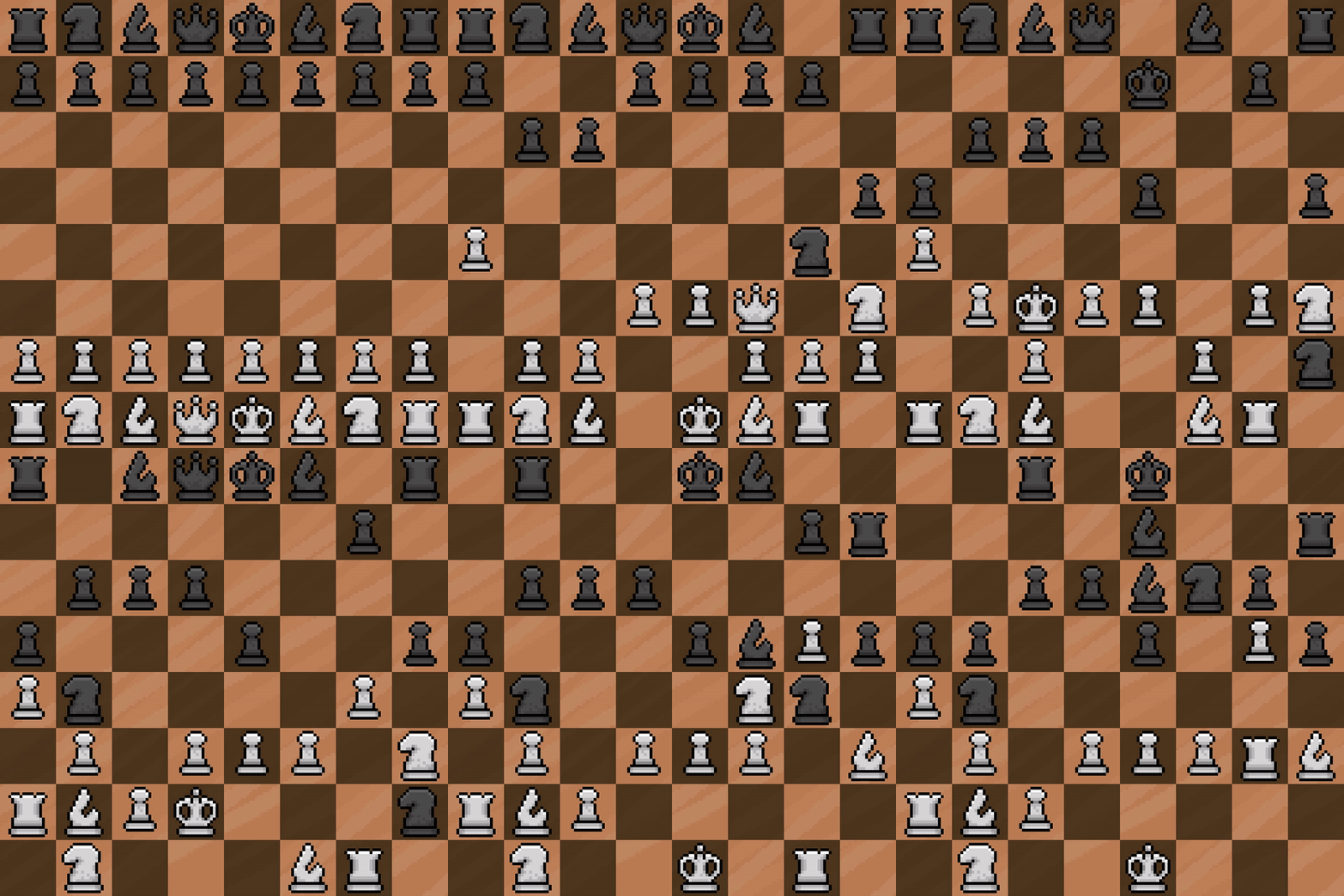
Standard chess with two players. MOSAIC provides a built-in Stockfish opponent so you can play Human vs AI or pit RL agents against the engine.
ID:
chess_v6Players: 2
Action space: Discrete (legal moves)
Observation: 8×8×111 binary planes
Note
Requires the Stockfish binary: sudo apt install stockfish (Linux)
or brew install stockfish (macOS).
Go
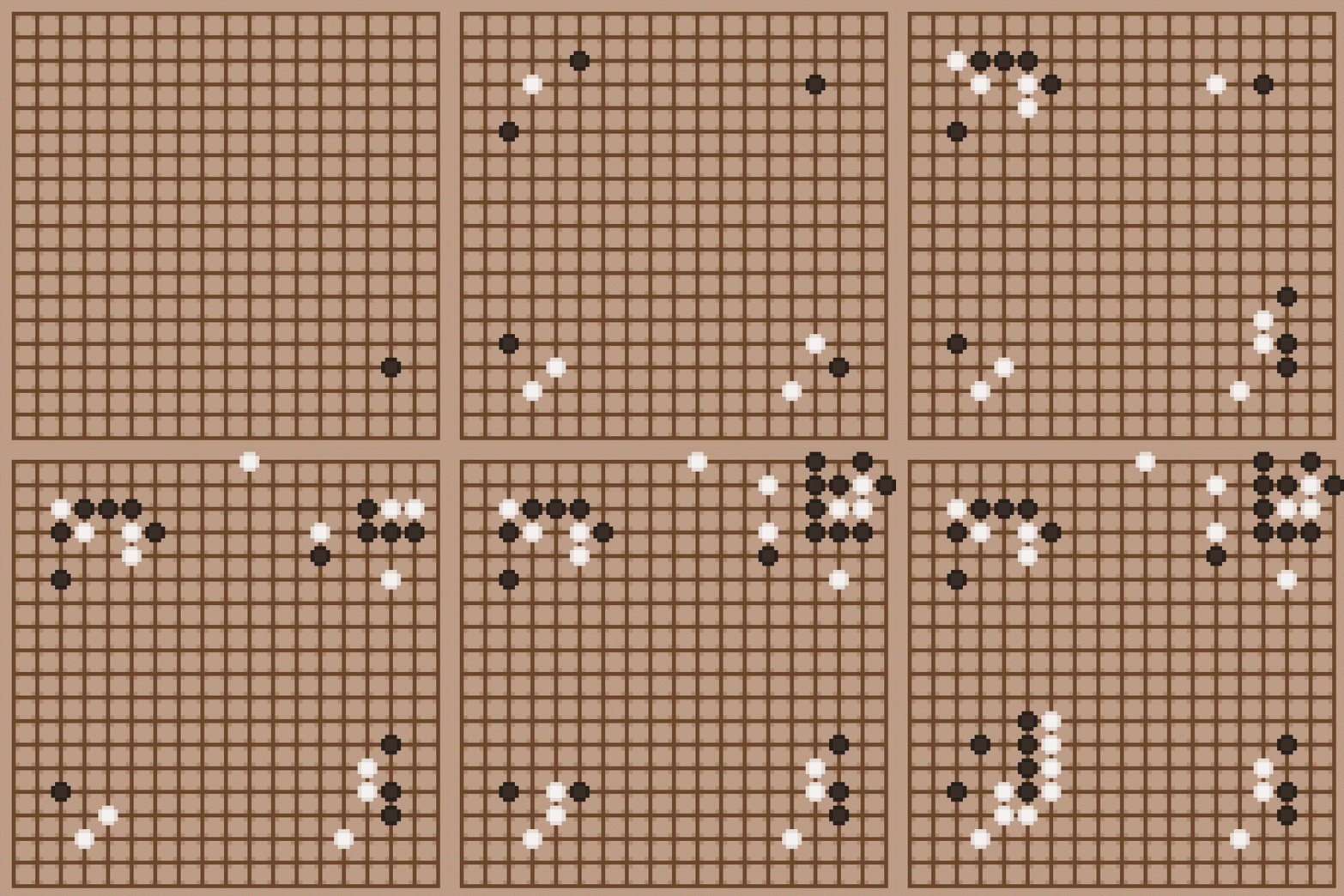
The ancient board game of Go. Supports 9×9, 13×13, and 19×19 board sizes.
ID:
go_v5Players: 2
Action space: Discrete (board_size² + 1 for pass)
Observation: board_size × board_size × 17 planes
Connect Four

Classic 4-in-a-row game on a 6×7 board. A simple environment often used for testing multi-agent algorithms.
ID:
connect_four_v3Players: 2
Action space: Discrete(7) — column selection
Observation: 6×7×2 binary planes
Tic-Tac-Toe

3×3 Tic-Tac-Toe. The simplest PettingZoo Classic environment — ideal for testing MOSAIC’s sequential stepping pipeline.
ID:
tictactoe_v3Players: 2
Action space: Discrete(9) — cell selection
Observation: 3×3×2 binary planes
Tip
In MOSAIC, you can assign different agent types to each player.
For example, player_0 as Human keyboard control and player_1
as a CleanRL-trained PPO agent:
policy_service.bind_agent_policy("player_0", "human_keyboard")
policy_service.bind_agent_policy("player_1", "cleanrl_ppo")